

Christos Ziogas*: Strategic opportunities and obsessions
 Turkey's exclusion from the aircraft production program F35, occurred due to the supply from Ankara of Russian anti-aircraft missilesS400. The Turkish Ministry of Foreign Affairs he countered that: "This unilateral measure goes against the spirit of the alliance and is not based on legitimate reasons (…). The exclusion of Turkey, one of the partners in the F-35 program, is unfair"US President Donald Trump also referred to the unfairness of the decision for both parties. The necessity of self-interest seems to have prevailed over the mutual feeling of injustice for the occupant of the White House.
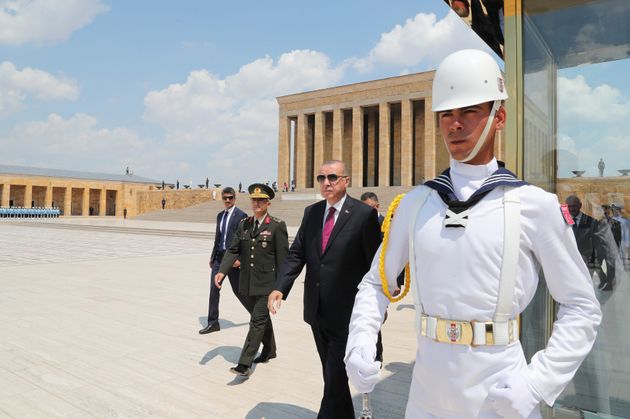
Gradually, the politician in question realizes that maintaining American hegemony is a much more complex matter than the more familiar operational command.
The confrontation between Turkey and the United States arises from Ankara's ambition to make known to the international community its claim to advancement in the regional distribution of power . Of course, such aspirations have a corresponding price, especially when it questions the choices and goals of the dominant Western coalition in the region.
The Western hegemon has already begun to determine the cost of Turkey's attempt at emancipation, through deterrence strategies. Washington wants to demonstrate to Ankara that the cost of its strategic independence will be greater than the potential benefit. Turkey's imprisonment is already underway and aims to maintain it in the alliance network of the United States, which constitutes an integral part of American hegemony.
Greek-American relations are experiencing the best period of their post-war course, but they are still far from being defined as independent of American-Turkish relations.
In the field of Greek-Turkish relations, after the Imia crisis (1996), the process of Turkey's accession to the EU was launched, as a new strategy but also as a sign of domestic self-confidence for their normalization. It is known that Washington took the lead in this decision, as well as what the turn of events was in the twenty years that passed. The prognosis that the Europeanization of our neighbor and the "strength" of our legal bases will bring about the resolution of bilateral issues is far from a diagnosis. Undoubtedly, the deterioration of US-Turkish relations over the last decade is a positive development for Greece and Cyprus.
At the same time, for at least two decades, Turkish diplomacy has been proceeding under the assumption - not unjustly - that Athens has lost the initiative of its movements, satisfied simply with avoiding a new crisis and a potentially damaging compromise. Of course, with this specific practice, Greece has failed to serve its interests, defining them as inalienable rights that it will exercise over time.
The rational diplomatic initiatives and collaborations with Tel Aviv and Cairo -with the participation of Nicosia- are in the right direction, but they should not be undermined by entrenched practices. The deafening absence of Athens from the Cypriot EEZ is not consistent with the spirit of the security structures that we have built. It will be extremely damaging, even disastrous, if Israel and Egypt consider that we see these specific strategic partnerships as a means of "burden transfer" ( John Mearsheimer 's terminology ), that is, for the two states to shoulder the burden of Turkish revisionism.
The myths of the previous period, regarding the interpretation of Turkish domestic and foreign policy, not only did not serve the interests of Greek and Cypriot society, but they also endanger stability in the eastern Mediterranean.
Our partners and allies may “bless our innocence” but they certainly “do not envy our folly” , according to the well-known phrase of the Athenians to the Melians in the well-known and historically repeated dialogue between them. ( Thucydides, History, Book V, 105 )
The newly elected Greek government, in order to be able to apply the provisions of the law of the sea in order to serve Greek and Cypriot interests, must integrate them into a broader strategic framework, in which the interests of other states will also be served , but not only by other states. The broader American strategy in the eastern Mediterranean favors the maintenance of the existing status quo , which obviously serves its interests better. Greek foreign policy would be more advantageous to exploit the deterioration of American-Turkish relations, rather than seek or wish for their improvement. Also, within the European framework, let us derive the benefits that it can objectively provide us, and let us not have unfounded expectations.
The Greek and Cypriot zones of sovereignty and sovereign rights, in addition to provisions of international law, can function as a means of hindering Russian and other revisionisms, especially if there are significant energy resources within them.
Let us seize the opportunity, because if Washington-Ankara relations are restored, the rest of the frameworks for exercising Greek and Cypriot foreign policy will also be differentiated. Unless we consider that if United States-Turkey relations are restored, the security structures with Israel and Egypt will remain unaffected, as will the belated willingness of our EU partners to impose sanctions on Ankara. Then again, they will "show clearly that they consider pleasant things honorable and interests just" (Athenians' accusation against the Spartans, trying to convince the Melians to accept the hegemony of the former, Thucydides, History, Book V, 105) and part of Greek society will blame the American factor, European reluctance and the cunning allies.
Source 
*Christos Ziogas was awarded a Doctorate in International Relations from the Department of International, European and Regional Studies of Panteion University in 2013. Since then, he has been teaching at the department at undergraduate and postgraduate levels, and has also begun postdoctoral research on the topic: Anthropological Trends in the Post-Cold War International System. For the last three years, he has been a teaching assistant at the rank of Lecturer at the Hellenic Military Academy, teaching International Relations. Also, last year and the current academic year, he has been teaching at the Department of Mediterranean Studies of the University of the Aegean: Theory and Methodology of International Relations, Greek-Turkish Relations and International Security Issues.