

Germany Acts: Should we fear Germany's military power?

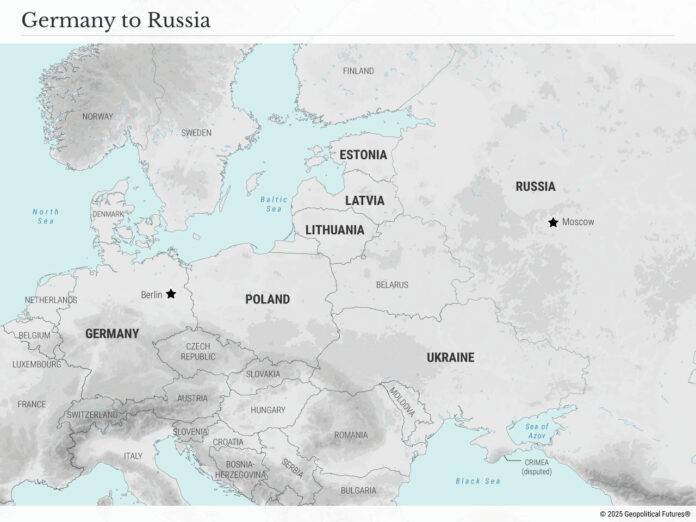
Germany’s decision to deploy a permanent force of 5.000 soldiers in Lithuania is extremely significant, as it marks the entry into a new phase of the geopolitical era we are living in. One of the fundamental questions of this era is whether the United States will limit its military and economic involvement in the global system. In this context, Washington has demanded that Europe take primary responsibility for its security and has taken the first steps to reshape the international economic order established after World War II to facilitate this transition. Until now, we have been waiting to see how Europe will react.
The German deployment is the first response. The size of the force is not intended to deter a full-scale Russian attack – obviously – but rather to provoke a broader European mobilization and to heighten Moscow’s vigilance. With this move, Germany is establishing a tangible military commitment in Europe, which raises the question: is this the first in a series of European actions or an isolated act? As I have argued, “Europe” is simply the name of a continent – a geographical entity slightly larger than the continental United States, comprising 44 sovereign states. A coordinated European response would have a different meaning than 44 individual ones.
Equally important will be the reaction not so much of NATO as a whole, but of its four most powerful and geographically crucial states: the United Kingdom, Germany, France and Poland . While it remains unlikely that they would deploy permanent military forces in positions to block a Russian advance westward, the war in Ukraine has made this prospect more realistic.
Even if Germany’s action remains isolated, it represents a crucial shift in the European balance. The country has been, if only gradually less so, a pariah state since World War II – one might say, since World War I. It launched hostilities in both wars, against countries that are now NATO members, against others outside the Alliance, and – most importantly – against the Soviet Union. After World War II, it did not immediately return as a sovereign state, but remained divided and occupied by the West and the Soviet Union until the 1990s. After reunification, it quickly became the economic epicenter of the European continent. Although its weight makes it first among equals in the EU, Germany has been cautious about the exercise of military power. Europe has a long memory, and for centuries its history was one of continuous war. Germany's decision to deploy troops to Europe – a decision welcomed by both the US and other European countries – violates its previous commitment to moderate leadership ambitions.
Simply put, the deployment of troops in Lithuania may herald the reemergence of Germany as a geopolitical power.
If such a commitment had been made by the United Kingdom, France, or Poland, we might not have paid so much attention. But Germany has made the commitment, and Europe is now being asked to consider not only what the United States wants, but also what might become what “Germany wants.” It is possible that the fear of German power is a thing of the past – but I am not at all sure that is the case.
There is, of course, the “Russian question” to consider. The decision to send troops to Lithuania was based on careful strategic thinking. Lithuania borders Latvia, Poland, and Belarus; it has no borders with either Russia or Ukraine. If Russia, for example, were to move rapidly to seize Ukraine and then reclaim the states that once belonged to the Soviet Union, or if it were to attempt to regain influence in the European satellite countries it once held, then a German armored brigade permanently based in Lithuania would raise the stakes considerably. Again, a single brigade could not stop the entire Russian military machine, but an attack on Lithuania through Belarus would carry a serious risk of NATO—and therefore, the United States—intervention. It is an extremely strategic point for deploying forces and for making it clear to Russia that expansionist policy will have a cost.
At the same time, neither Germany nor Lithuania borders Ukraine, so Moscow cannot interpret this move as a direct military threat to Ukraine; nor can it threaten Lithuania without revealing its intentions to the other countries. This gives NATO, Europe, and the United States time to react.
Germany may also have provided a model for European self-defense: deploying troops in forward positions near – but not on – the Russian border suggests that actions beyond Ukraine would give European countries the ability to react quickly, while at the same time preserving NATO’s flexibility to respond at will. (As I have said before, it may seem absurd to imagine Russia advancing beyond Ukraine these days – but states do not formulate long-term strategy based on optimism.)
The US decision to withdraw from its role as the guarantor of European security has created a crisis on the continent. Fortunately for Europe, the United States’ actions so far have been mostly rhetorical; despite the intense rhetoric, the US has not withdrawn troops from NATO and has yet to clarify the exact nature of its statements. Nevertheless, states remain states, and will always act in their own interests. An alliance like NATO only exists when its member states see the world in a similar way.
The German troop buildup could force Europe to decide what to do – and not deciding is a decision. The shock Europe has suffered has had exactly the impact it was looking for. Germany may be a role model, but given its history, it is unlikely to be allowed to lead. Europeans have long memories.
* George Friedman is an internationally recognized geopolitical analyst and strategic advisor on international affairs. He is the founder and president of Geopolitical Futures. Dr. Friedman is also the author of many widely read books, including titles that have made the New York Times bestseller list.