

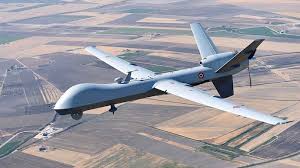
The Emergence of UAVs.
The Role of Unmanned Systems and Cyberwarfare in Greece's Military Strategy: Challenges and Opportunities in the Mediterranean Area
Technological developments in defense and warfare have brought about a radical change in the way states plan, deter and conduct military operations. Particularly in the Eastern Mediterranean and the Greek-Turkish zone of tension, the presence of unmanned aerial vehicles (UAVs) and cyberattacks constitute critical dimensions of a new, “intangible” battlefield. Greece, given the geostrategic pressures it faces, must adapt to this new reality by investing in corresponding capabilities, in order to ensure its deterrence, sovereignty and strategic autonomy.
The Emergence of UAVs in the Mediterranean
Unmanned aerial vehicles have become a tool of major strategic importance. From surveillance and reconnaissance platforms, they have evolved into high-precision armed attack vehicles, contributing decisively to the formation of tactical superiority in the field. Turkey, a pioneer in the use of UAVs in the region, has strengthened its fleet with Bayraktar TB2, Anka-S and recently the Akinci, highlighting this technology as a pillar of its foreign policy (Kibaroglu, 2022).
Greece was slow to respond, but is now attempting to bridge the gap. It has strengthened cooperation with Israel through the acquisition of Heron-type UAVs, while at the same time developing the domestic “Archytas” program with the aim of creating a Greek multi-role drone (Naftemporiki, 2023). Beyond War & Stars points out that technological independence in UAVs is not only a military goal, but also a strategic statement of geopolitical autonomy: “States that control the technologies of the sky control sovereignty on the ground” (p. 112).
UAVs in Evros and the Aegean
In practice, the Greek-Turkish border has been transformed into a testing laboratory for unmanned systems. In Evros, cases of Turkish drones flying very close to the national territory have been recorded, even at low altitudes in order to avoid radar detection. Similarly, in the islands of the Eastern Aegean, UAVs are used for surveillance and psychological operations (Hellenic Ministry of Defense, 2024).
Greece is responding by upgrading its aerial surveillance, while testing counter-drone (C-UAV) technologies with jammers, electromagnetic weapons, and short-range autonomous radars. Beyond War & Stars suggests that the showdown will not be decided solely on interception, but on the ability to respond quickly, network-centrically: “The drone war is not won in the air, but in the seconds of decision” (p. 145).
Cyberwar and the Invisible Front
Cybersecurity has become a major battleground, especially for countries with critical infrastructure and exposed networks. Since 2020, dozens of cyberattacks have been detected on Greek ministries, utilities and banking institutions, several of which are – unofficially – attributed to state actors (ENISA, 2023).
The new National Cybersecurity Center and Greece’s integration into European cyber defense structures (such as the Cyber Rapid Response Team) are steps in the right direction. However, according to Beyond War & Stars , the cyber defense strategy cannot be based solely on defense: “The next domain of dominance is cyberspace, and its possession will depend on the ability to predict and simulate digital conflict” (p. 173).
The Hybrid Nature of Modern Warfare
UAVs and cyberattacks do not operate in isolation, but are part of a broader hybrid warfare doctrine. Turkey simultaneously utilizes military means, migratory flows, communication influence, and cyber tools to shape a continuous field of pressure towards Greece (Hoffman, 2009).
This “gray spectrum” of operations makes it difficult to define red lines and even more difficult to respond proportionately. As Beyond War & Stars points out , “the enemy of the future will not wear a uniform and send tanks; he will send data packets and fly over your head without casting a shadow” (p. 188).
Collaborations and National Know-how
Greece is aware that technological defense cannot be achieved with national resources alone. It is already cooperating with Israel, the US, and EU countries to procure and co-finance drone programs and cyber tools (European Defence Agency, 2024). However, the balance between dependence and technological independence remains delicate.
Beyond War & Stars emphasizes the importance of this balance: “Technological security is not bought – it is built. Any imported system without corresponding national expertise is a future weakness” (p. 201).
Conclusions
Greece is facing a new era of threats, where traditional concepts of territory, borders and military capabilities are being challenged by invisible adversaries and unmanned machines. Acquiring capabilities in the field of UAVs and cyberwarfare is not an option, but a necessity.
Strategic planning must become holistic, incorporating artificial intelligence, network-centric operations, and interoperable doctrines. As stated in Beyond War & Stars , “the war of tomorrow is already here—we just don’t see it yet, because it moves at the speed of light and is hidden in signals” (p. 229).
Bibliography
- ENISA (2023). Annual Threat Landscape Report. European Union Agency for Cybersecurity.
- European Defense Agency (2024). Joint EU Programs on Tactical UAVs and Cyberdefense.
- Hoffman, F. (2009). “Hybrid Warfare and Challenges.” Joint Forces Quarterly, Issue 52.
- Kibaroglu, M. (2022). “Turkey's Drone Doctrine.” Middle East Institute.
- Ministry of National Defense (2024). Annual Report on National Defense.
- Kathimerini (2023). “Greece acquires Israeli UAVs for surveillance of the Aegean.”
- Naftemporiki (2023). “The 'Archytas' program and the future of Greek UAVs”.
- Beyond War & Stars: The Future of Weapons, Space, and Humanity (2024).